Tips & Tricks
How to Measure Flour Correctly Without a Scale
Master the spoon and level method to measure flour accurately without a scale. Get perfect results every time in your baking.
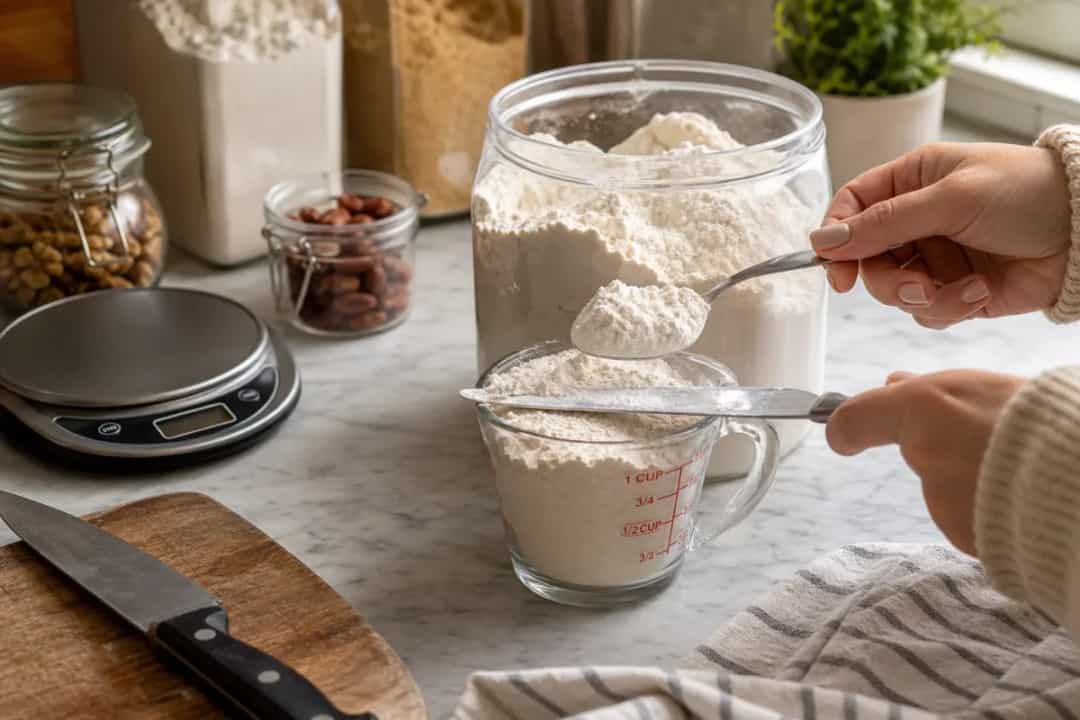
Measuring flour correctly is crucial for baking success. Too much or too little flour can ruin your recipes, leading to dense cakes or flat cookies. The spoon and level method is a simple way to ensure you're measuring accurately without needing a kitchen scale.
Why Accurate Measurement Matters
When baking, precision is key. The right amount of flour affects the texture and flavor of your baked goods. Using the spoon and level method prevents you from packing flour into your measuring cup, which can lead to inaccuracies.
The Spoon and Level Method
This method is straightforward and effective. Here are the steps:
Steps to Measure Flour
- Fluff Up the Flour: Use a whisk or spoon to aerate the flour in its container. This loosens it, preventing it from compacting.
- Spoon the Flour: Take a spoon and scoop the flour into your measuring cup. Avoid scooping directly from the container, as this can pack the flour.
- Level It Off: Use a straight edge, like a knife or spatula, to level off the excess flour from the top of the measuring cup. This gives you a precise measurement.
Tips for Different Types of Flour
- All-Purpose Flour: Follow the spoon and level method as described.
- Whole Wheat Flour: This flour is denser; use the same method but be aware it may absorb more liquid.
- Cake Flour: Light and airy, use the spoon and level method to avoid clumping.
Common Mistakes to Avoid
- Packing Flour: Never press down on the flour in your measuring cup. This adds more flour than necessary.
- Using the Wrong Cup: Always use dry measuring cups for flour, not liquid measuring cups.
Pro Tips
- Sift First: If your recipe calls for sifted flour, either sift before measuring or after measuring but be consistent.
- Practice Makes Perfect: Try measuring flour for different recipes to get a feel for the right techniques.
- Use a Light Hand: When spooning flour, let it fall gently into the cup without packing it down.
Safety Note
While measuring flour is generally safe, always check for signs of spoilage, like an off smell or insect presence. Store flour in a cool, dry place in an airtight container to prolong freshness.
Conclusion
Now that you know how to measure flour correctly without a scale using the spoon and level method, you can confidently tackle any baking recipe. Give it a try and enjoy the precision in your baked goods!